
Noticing Contrasts

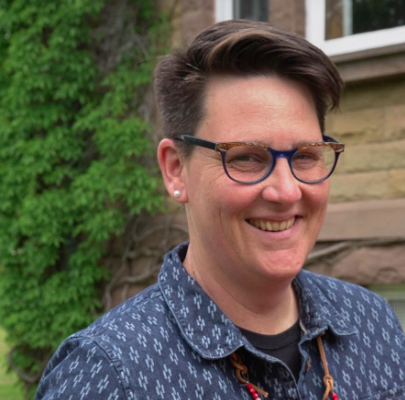
Jodi Spargur lives as a guest on the unceded Coast Salish Territory known as Vancouver and directs Red Clover Initiatives, a non-profit network that creates Indigenous led local actions for healing and justice. Jodi is also a PhD. student with NAIITS: An Indigenous Learning Community working on land-based reparations in Canada. Prior to her current work Jodi served as a pastor in Vancouver for over 20 years, and ran an urban farm in the Downtown Eastside.
I once spent a year in the southern hemisphere, and it turned my theology upside down. Well, not my theology per sey, but my sense of the Christian year and how it felt in my body and spirit. Through this change in geography, I suddenly became aware of the larger context in which I had been interpreting the Christian year due to my surroundings.
In the southern hemisphere, Jesus, at Christmas, was not a baby born in defiance of the darkest nights of the year “in the bleak mid-winter.” He was, instead, new life amidst a throng of new life breaking forth all around. In a similar juxtaposition, the Lenten journey toward Christ’s passion and resurrection in the southern hemisphere was a journey into deeper darkness as the days around grew shorter. Lent in Fall, moving toward winter, was a discipline of dying to self as creation itself was dying and falling into the decay of winter dormancy. The resurrection would occur, entirely unlikely and unexpected in the darkest of early morning vigils. In contrast, the Lent to which I was accustomed was sustained by the slowly lengthening days and the signs of creation nudging us toward the idea that life would emerge despite the killing impact of a cold, harsh winter.
This disorientation in place reminded me how much I find comfort in contrasts. Being in a new space helped me see these familiar patterns with new eyes.
Noticing contrasts guards against my tendency toward totalizing narratives. Does that happen to you? Do you feel as though the season you are currently in is the only one that will ever be? Today’s reading from the Psalms invites us out of totalizing narratives to remember and notice the undulating rhythms of grace that mark our lives. This disciplined litany of contrast is a tutor in the art of noticing.
The Psalmist encourages us to give thanks to the Lord, for God is good, and God’s love endures forever. This is not just an admonishment to be grateful and look on the sunny side of things. The redeemed of the Lord are encouraged to notice the rhythms of their story. This story has both deep distress and a God who listens and responds in love. In the familiarity of the present moment, the Psalmist calls the reader to remember another reality, and in light of the contrast to give thanks.
Give thanks to the Lord, for he is good;
his love endures forever.
Let the redeemed of the Lord tell their story—
those he redeemed from the hand of the foe,
those he gathered from the lands,
from east and west, from north and south.
Some wandered in desert wastelands,
finding no way to a city where they could settle.
They were hungry and thirsty,
and their lives ebbed away.
Then they cried out to the Lord in their trouble,
and he delivered them from their distress.
He led them by a straight way
to a city where they could settle.
Let them give thanks to the Lord for his unfailing love
and his wonderful deeds for mankind,
for he satisfies the thirsty
and fills the hungry with good things.
Some sat in darkness, in utter darkness,
prisoners suffering in iron chains,
because they rebelled against God’s commands
and despised the plans of the Most High.
So he subjected them to bitter labor;
they stumbled, and there was no one to help.
Then they cried to the Lord in their trouble,
and he saved them from their distress.
He brought them out of darkness, the utter darkness,
and broke away their chains.
Let them give thanks to the Lord for his unfailing love
and his wonderful deeds for mankind,
for he breaks down gates of bronze
and cuts through bars of iron.
I don’t know about you, but I have had a harder time observing Lent since the pandemic. It’s not just the pandemic; there are things in the world that are hard and heavy, and in many ways, it feels like the weight that settled in with the heaviness of pandemic realities hasn’t really lifted like we all hoped and expected.
Thank you for reading the New Leaf Lent Series, a collection of reflections from writers across Canada. If you are enjoying the reader, sign up to receive the readings in your inbox each day here: SIGN UP
And please share this reflection with your friends and family who might also enjoy it.
Read more posts for Lent


I am maybe seven years old. It is summertime on the farm. One of our cats, a tabby named Charity,* has just given birth to kittens. When I discover them in the barn, I am beside myself with delight and wonder. I crouch down and gaze upon the five furry little miracles wriggling in the straw. I soon notice that one of them is smaller than the others. A lot smaller…

In the spring, I’m a rugby coach. I’m also a lot of other things, but in the spring, I live in my rugby sweatshirt. I love the smell of the earth—the dirt softening and giving way to grass. I love that it is a sport that draws together an eclectic group of players, a few who are naturally athletic or have played other sports, but also many for whom this is it, a hodgepodge of misfits finding a place to belong…

I recently attended my first “Forest Church” service. The conservation area where it was hosted was one of the most beautiful sanctuaries I have ever gathered in. The snow was melting, and the creek was rushing with its runoff, creating a background rhythm, which was joined by a gentle breeze whistling through the trees and accompanied by a choir of birds singing their choruses…

Kids are chasing each other around, ‘sword fighting’ with the cedar branches that we just handed them. I try to corral these little warriors, seeking to control that which simply won’t be controlled. Sigh. This is how our church’s Palm Sunday ‘processional’ begins…

Like many others have expressed in their reflections, the Lenten season has a special place in my being. It coincides nicely with the darkest time of the year, during which I often find myself heavily stressed and depressed. Every year, old wounds and new wounds find themselves out in the open, and God invites me on another journey towards healing…

In 2017, I lost two grandparents within months of each other. With my 嫲嫲 (paternal grandmother), the news was not unexpected. She had been ill for quite some time, slowly deteriorating in the hospital…

I am writing during a Sabbatical pause from work and ministry,
And this is a dangerous place.
I’ve been thinking and reflecting and longing and feeling a LOT lately…

For the past few years, I have slowly been making my way through Robert Alter’s translation (with commentary) of the Hebrew Bible, and it just so happened that I began the book of Job in mid-January. Job can be a difficult book for many reasons, but, somewhat surprisingly, I have found the Job poet’s words to be particularly relevant and meaningful as I journey through Lent this year…

Over the years, the story of Jesus washing his disciple’s feet has captivated my imagination. A few years ago, Jesus’ response (“Unless I wash you, you have no part with me.”) to Peter’s declaration that Jesus would NEVER wash his feet caught my attention as I pondered what it means to be willing to receive…

What do you want to do with your one and only life?
Be your true, authentic self!
Live from the centre of who you truly are!
These kinds of over-sized enthusiastic questions and maxims are what greet people like me who live in the liminal space of trying to decide what to do next…

Lent is a season of preparation and a time to remember Jesus’ journey to Golgotha so that we can celebrate Jesus’ resurrection with great joy. I observed a fast and other spiritual disciplines during Lent for many years. Yet, I’ve struggled to find a meaningful Lenten practice to observe this year…

The early years of my spiritual formation happened in a large Evangelical Pentecostal church in the little city of Guelph, Ontario. During the 90s, Lent was not a season that we spoke about or practiced in our faith tradition. We certainly wished no ill will towards our mainline brothers and sisters, but I always had the impression that we were at best suspicious…

I woke up this morning with the weight of the world on my chest. I have learned to listen with compassion to these weights, but this morning, the weight is mysterious. I can’t quite point to one cause…

That little whisper in my ear or a feeling in my gut that says there is not enough to go around. I need to fight for my share. My fear that something that can’t be healed will happen to my kids. My tendency to overestimate and project far into the future the negative consequence of one small action (or inaction). These are the ways that the accuser uses temptations in my life…


“Each morning comes along and you assume it will be similar enough to the previous one – that you will be safe, that your family will be alive, that you will be together, that life will remain mostly as it was.”
That’s from Cloud Cuckoo Land, American author Anthony Doerr’s new book.
“Then a moment arrives and everything changes” (64).
In Cloud Cuckoo Land, the world ends roughly five times…

I’m yanking persistent weeds through the black shroud covering last summer’s flower beds. It’s Good Friday. Steve, who has only 15 days left to live, is sitting in the sun keeping me company – that simple act of marriage – while I weed and muse…